Fresh Milled Flour for Beginners: What to Know Before You Bake
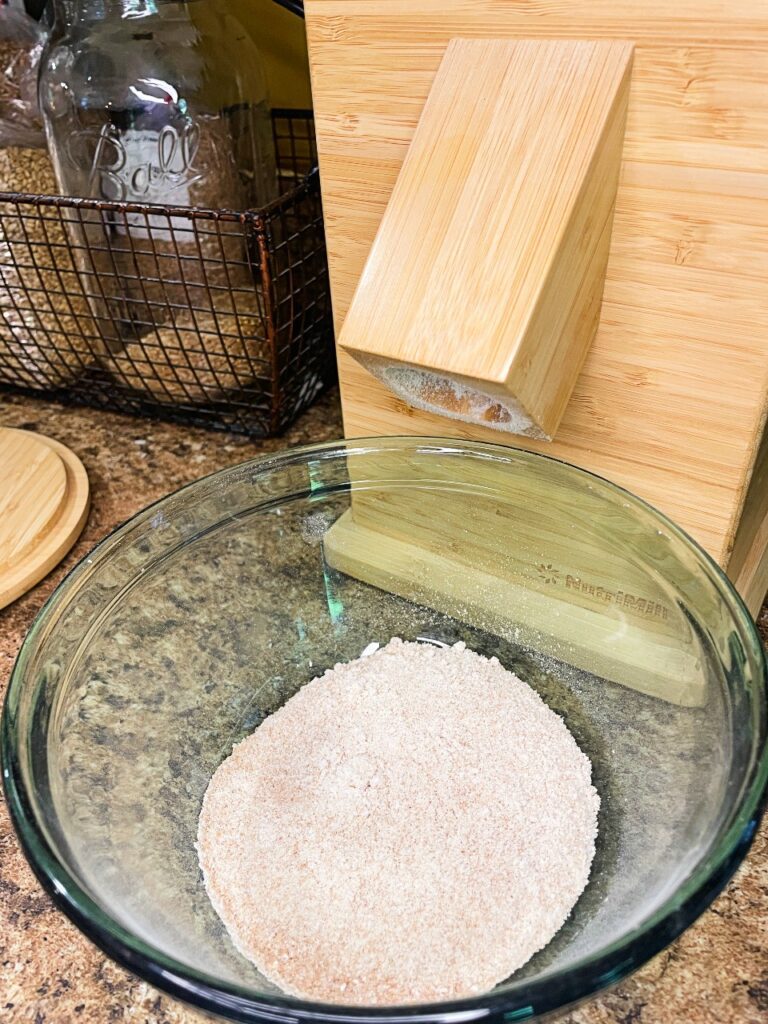
Fresh milled flour is flour made by grinding whole wheat berries right before you bake. Instead of using flour that has been sitting on a store shelf, you’re grinding the grain fresh at home and using the whole thing, including the bran, germ, and endosperm.
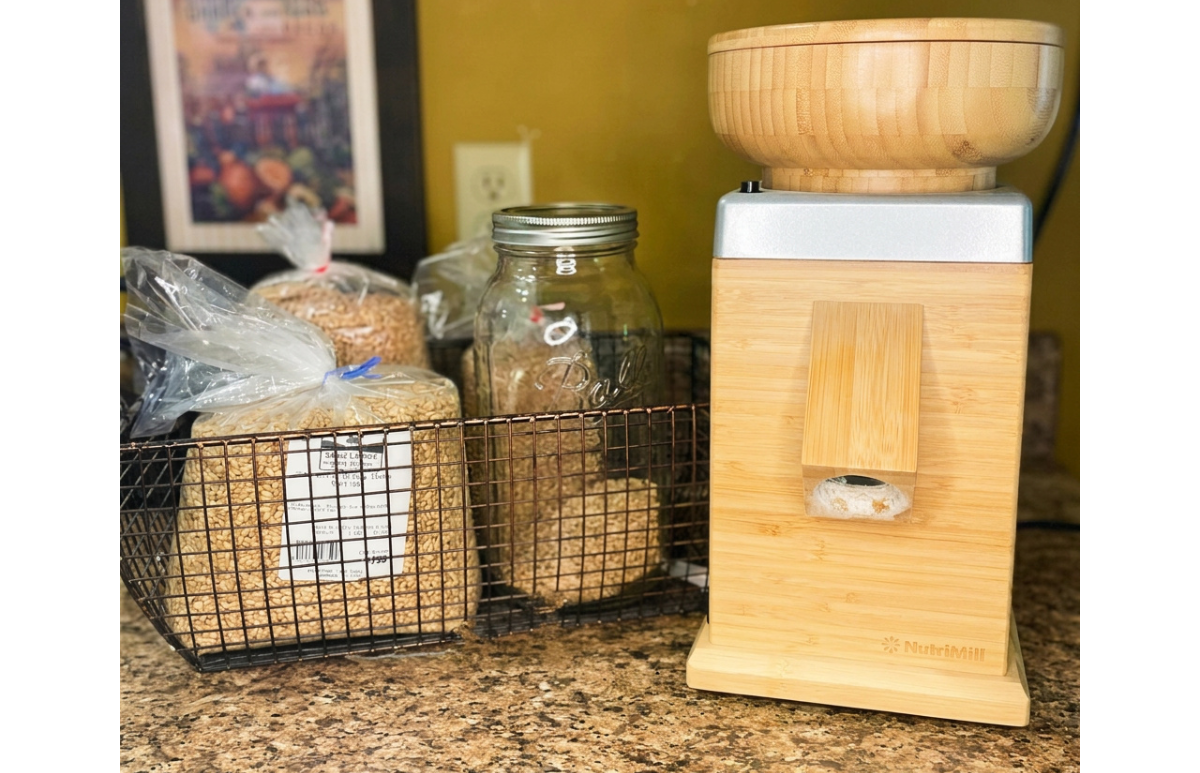
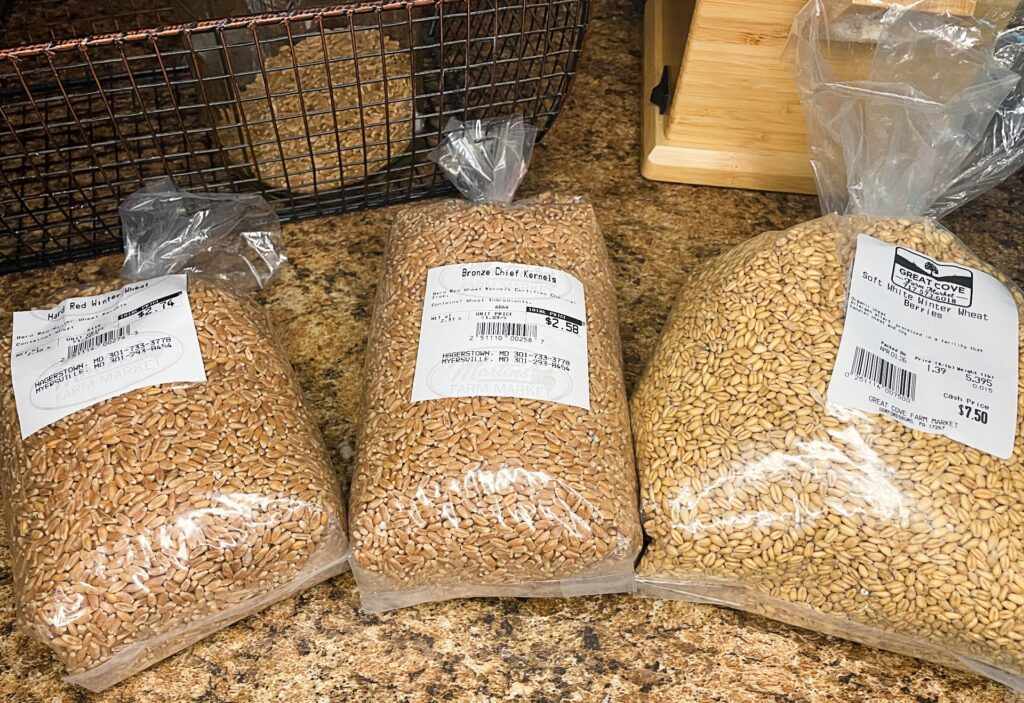
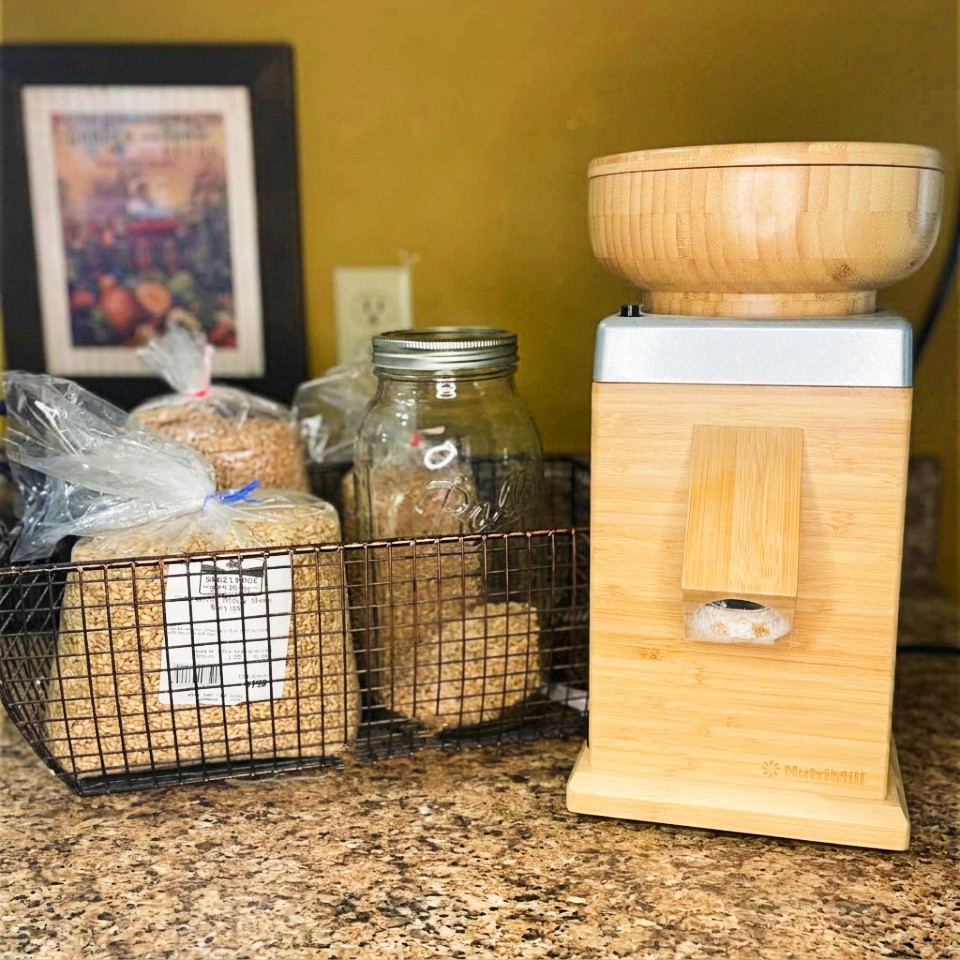
Right now, I’m learning with a NutriMill grain mill and a few bags of wheat berries I picked up from a Mennonite bulk store. I started with soft white, hard white, and hard red wheat berries, which has given me a good beginner mix for both bread and softer bakes.
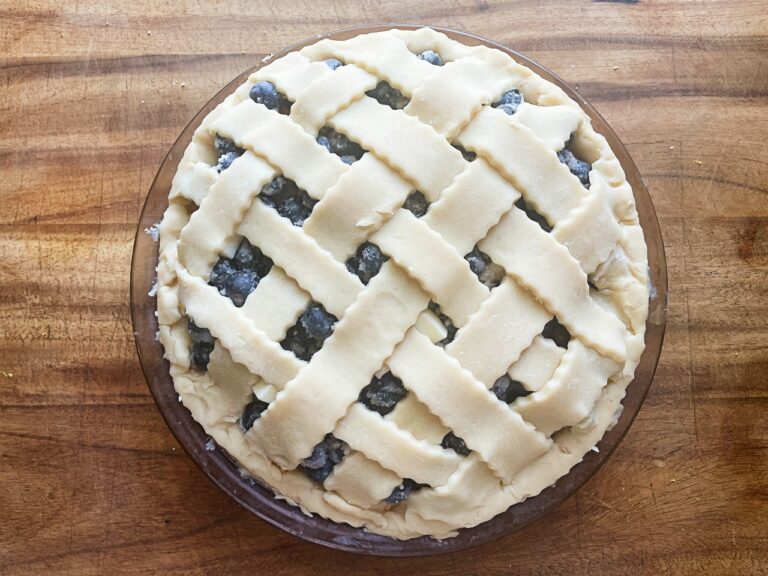
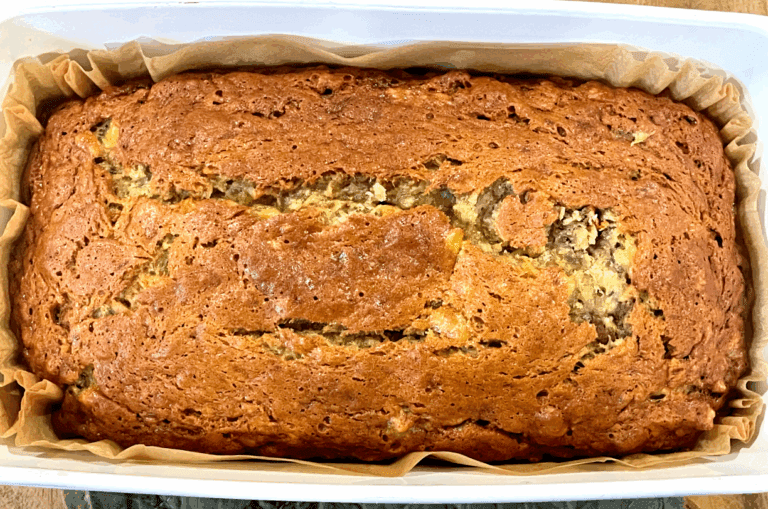
The first thing I made was pie dough with soft white wheat berries for a strawberry rhubarb pie. Then came bread, which was a little more humbling. My first loaf had dough that was too wet and turned out crumbly, so I turned it into croutons and called it a lesson. My second loaf, though, was amazing.
That’s when I realized fresh milled flour really does bake differently. The bread was so soft, and it stayed soft longer than bread I had made with store-bought flour.
If you’re brand new to fresh milled flour, it can feel a little intimidating at first. I get it. It’s not exactly the same as scooping all-purpose flour from a bag and going on with your day. Fresh milled flour absorbs liquid differently, doughs can feel stickier, and bread might take a few tries before it feels familiar.
But it’s also a really rewarding way to bake. The flavor is deeper, the flour feels more alive, and there’s something pretty special about turning wheat berries into bread, muffins, pancakes, cookies, pie dough, or whatever else you’re making in your kitchen.
And just remember: your first loaf will be your learning loaf.
That’s not a failure. That’s just part of learning how this flour works.
A Quick Note Before We Start
I’m still learning my way around fresh milled flour too, so think of this as a beginner’s guide from one home baker to another. These are the basics I’ve picked up through researching, using my grain mill, and paying attention to how fresh milled flour acts in real recipes.
It does feel a little different at first, and honestly, that can be intimidating when you’re used to regular flour. But it doesn’t have to be complicated. My goal with this post is to keep it simple, practical, and easy to understand so you can start baking with fresh milled flour without feeling like you need a whole science degree first.
Fresh milled flour has a learning curve, but we’re starting with the basics here. One loaf, one batch of muffins, one little floury lesson at a time.
What Is Fresh Milled Flour?
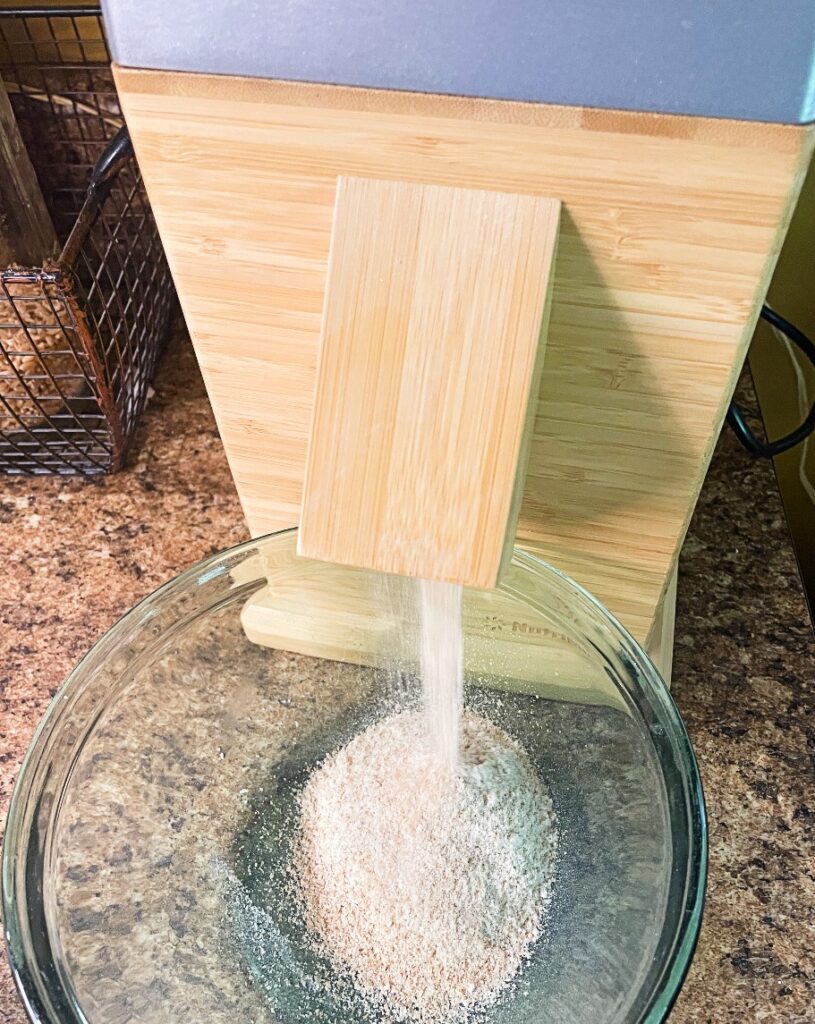
Fresh milled flour is flour made by grinding whole grains, usually wheat berries, at home with a grain mill.
Wheat berries are the whole wheat kernels before they’re ground into flour. When you mill them, you’re using the whole grain, which includes:
- Bran: the outer layer of the grain
- Germ: the nutrient-rich part of the wheat berry
- Endosperm: the starchy part that makes up most of the flour
Most regular white flour has the bran and germ removed. Fresh milled flour keeps those parts in, which gives it more flavor, more texture, and a heartier feel.
That also means it behaves a little differently when you bake with it. It’s not hard, it’s just different.
Is Fresh Milled Flour the Same as Whole Wheat Flour?
Fresh milled flour is usually a type of whole wheat flour, but it’s not exactly the same as the bag of whole wheat flour you buy at the store.
Store-bought whole wheat flour has already been milled, packaged, shipped, and stored. Fresh milled flour is ground right before you use it, so it has a fresher flavor and still has the natural oils from the wheat germ.
Those natural oils are part of what makes fresh milled flour so good, but they also mean it doesn’t keep as long as regular white flour.
Fresh milled flour has a deeper, nuttier flavor. Depending on the wheat berries you use, it can taste mild and soft or more hearty and earthy.
What Are Wheat Berries?
Wheat berries are the whole kernels of wheat. They’re what you put into your grain mill to make fresh flour.
There are different kinds of wheat berries, and they all work a little differently. This part can feel confusing at first, but you do not need to know everything right away.
Here are the basics.
Hard White Wheat
Hard white wheat is a great place to start. It has a mild flavor but still has enough protein for yeast breads.
It works well for:
- Sandwich bread
- Dinner rolls
- Pizza dough
- Sourdough bread
- Everyday bread baking
If you want one wheat berry to start with for bread, hard white wheat is a good choice.
Hard Red Wheat
Hard red wheat has a stronger whole wheat flavor. It’s a little more hearty and rustic.
It works well for:
- Whole wheat bread
- Sourdough bread
- Rustic loaves
- Hearty rolls
If you like a stronger wheat flavor, you may really like hard red wheat.
Soft White Wheat
Soft white wheat has less protein, so it’s better for tender baked goods instead of yeast breads.
It works well for:
- Muffins
- Pancakes
- Quick breads
- Cookies
- Biscuits
- Cakes
- Pie dough
This is the one I’d reach for when I want something softer and more tender, like pie crust, muffins, or cookies.
Rye
Rye is not wheat, but it’s often used with fresh milled baking. It’s especially nice for sourdough starters because it tends to ferment quickly and can help get things active.
It works well for:
- Sourdough starter
- Rye bread
- Adding flavor to bread dough
Spelt
Spelt is an older grain with a slightly sweet, nutty flavor. It can be lovely in muffins, pancakes, and some breads, but it can be a little more delicate to work with.
It works well for:
- Muffins
- Pancakes
- Quick breads
- Softer bread recipes
Best Wheat Berries for Beginners
If you’re brand new to fresh milled flour, I would keep it simple and start with two kinds:
Hard white wheat for bread
Soft white wheat for muffins, pancakes, cookies, biscuits, pie dough, and quick breads
That gives you a good beginner setup without feeling like you need a pantry full of grains right away.
I started with soft white, hard white, and hard red wheat berries, and that felt like a good mix. The soft white gave me something to use for more tender bakes, while the hard white and hard red were better suited for bread.
Once you get comfortable, you can start playing around with hard red wheat, rye, spelt, einkorn, or whatever else catches your eye.
How Much Flour Does 1 Cup of Wheat Berries Make?
A good beginner estimate is:
1 cup of wheat berries makes about 1 1/2 cups of fresh milled flour.
This can vary a little depending on the wheat berry and how finely you mill it, but it’s a helpful place to start.
Fresh milled flour can be fluffy right after it’s ground, so cup measurements are not always perfect. If you want the most accurate results, especially with bread, weighing your flour is helpful.
But if you’re just getting started, don’t let that scare you off. You can still learn a lot with simple measurements.
Does Fresh Milled Flour Need More Water?
Most of the time, yes. Fresh milled flour usually needs more liquid than regular all-purpose flour.
That’s because fresh milled flour includes the bran and germ, and they soak up more liquid. Sometimes a dough will feel one way when you first mix it, then feel totally different after it sits for a few minutes.
This is one of the biggest things to remember when baking with fresh milled flour:
Give it time to absorb the liquid before you decide what it needs.
For muffins, pancakes, and quick breads, you may only need a little extra milk or water.
For bread dough, it often helps to let the dough rest before adding more flour. Otherwise, it’s easy to add too much and end up with a heavy loaf.
And yes, it is possible to go the other way too. My first fresh milled loaf had dough that was too wet, and the bread turned out crumbly. Fresh milled flour takes a little learning, and sometimes the lesson turns into croutons.
Why Is Fresh Milled Flour Dough Sticky?
Fresh milled flour dough can feel sticky because whole grain flour absorbs water differently than white flour.
The bran in the flour can also make the dough feel a little rougher and less smooth at first. It may not feel like the soft, stretchy dough you’re used to with regular flour.
When that happens, try not to panic and dump in a bunch of extra flour.
I know. Sticky dough feels like it’s yelling at you.
But sometimes it just needs to rest.
Let the dough sit for 15 to 30 minutes after mixing. This gives the flour time to hydrate, and it can make the dough much easier to handle.
This is especially helpful for:
- Bread dough
- Pizza dough
- Rolls
- Sourdough recipes
Can You Use Fresh Milled Flour in Regular Recipes?
Yes, you can use fresh milled flour in regular recipes, but I would start with simple recipes first.
Some good beginner recipes are:
- Pancakes
- Muffins
- Quick breads
- Cookies
- Crackers
- Biscuits
- Pie dough
- Pizza dough
Bread is absolutely doable with fresh milled flour, but it usually takes more practice because whole grain dough acts differently than white flour dough.
If you’re brand new, start with recipes that are already written for fresh milled flour or whole wheat flour. Once you get used to how the flour feels, you can start trying it in your regular recipes.
How to Substitute Fresh Milled Flour for All-Purpose Flour
For quick recipes like muffins, pancakes, and cookies, you can start by replacing part of the all-purpose flour with fresh milled flour.
A good beginner place to start is:
Replace 25% to 50% of the all-purpose flour with fresh milled flour.
So if a recipe calls for 2 cups of all-purpose flour, you could try:
- 1 cup all-purpose flour
- 1 cup fresh milled flour
For muffins, pancakes, cookies, pie dough, and quick breads, soft white wheat is usually a good choice.
For bread recipes, I’d be a little more careful. If you replace all the flour in your favorite white bread recipe with fresh milled flour, it may not turn out the same. Start with a recipe made for whole wheat or fresh milled flour first.
Do You Need a Grain Mill?
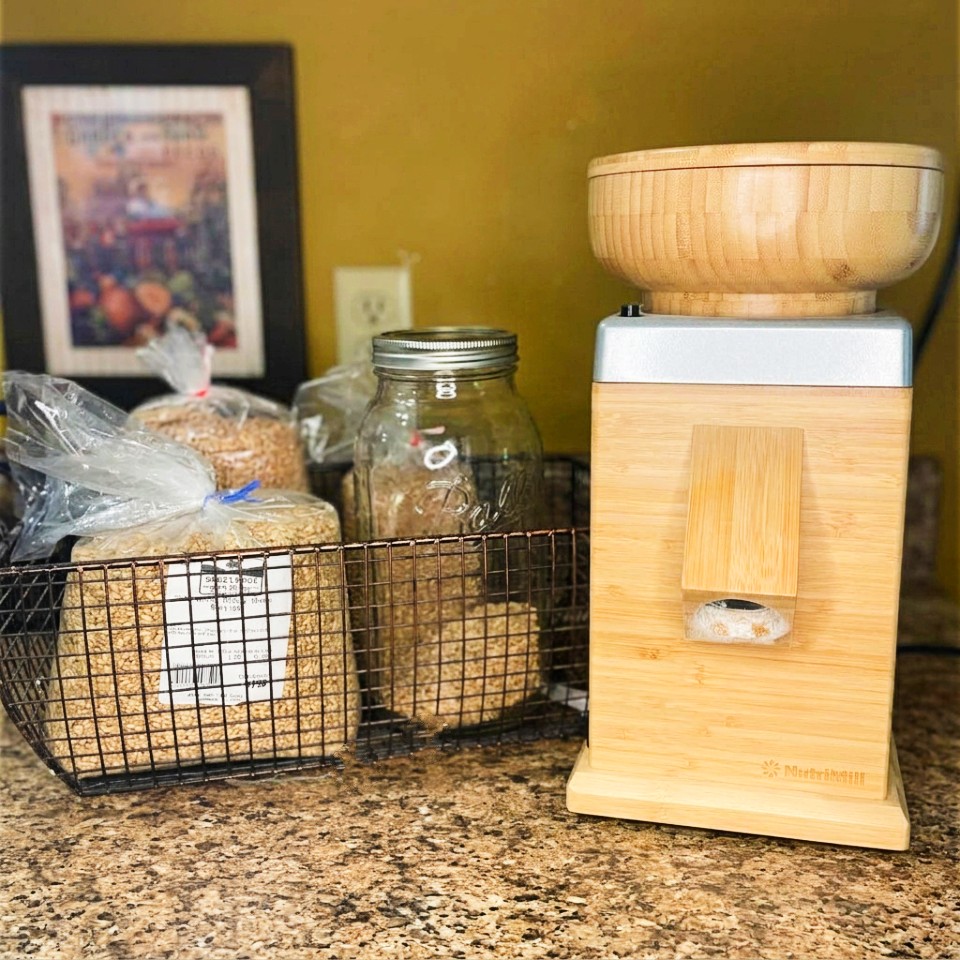
If you want to make fresh milled flour at home, you’ll need something to grind the wheat berries.
A grain mill is the easiest option, especially if you plan to bake with fresh milled flour often. I use a NutriMill, and so far it has been a helpful way to learn because I can mill what I need right before baking.
There are electric grain mills and manual grain mills. Electric mills are quicker and easier for regular baking. Some high-powered blenders can grind grain too, but the flour may not be as fine, and it may not be something you want to do all the time.
You do not need to know everything before you start. If you have a mill, some wheat berries, and a recipe to try, that’s enough to begin.
How Fine Should Fresh Milled Flour Be?
For most baking, I would start with a fine grind.
A finer flour usually works better for:
- Bread
- Rolls
- Muffins
- Pancakes
- Cookies
- Quick breads
- Pie dough
A coarser grind can make baked goods feel heavier or more crumbly. Some people like that rustic texture, but when you’re first learning, a fine grind is usually easier.
If your flour feels warm after milling, that’s normal. Let it cool for a few minutes before using it if it feels very warm.
Should You Sift Fresh Milled Flour?
You can sift fresh milled flour, but you don’t have to.
Sifting removes some of the larger bran pieces, which can make baked goods a little lighter. But it also removes part of the whole grain, and for everyday baking, I like to keep things simple.
If a recipe turns out too dense, you could try sifting next time and see if you like the texture better.
But if you’re just starting out, I wouldn’t overcomplicate it. Mill the flour, use it, take notes, and learn from there.
How to Store Wheat Berries
Wheat berries store much longer than fresh milled flour because they are still whole.
Keep them in an airtight container in a cool, dry place. You can use jars, food-safe buckets, or other sealed containers.
It’s also a good idea to label them with the type of wheat berry. Once you start buying a few kinds, they can all start looking a little too similar in the pantry.
How to Store Fresh Milled Flour
Fresh milled flour is best used soon after you grind it.
Because it still has the natural oils from the wheat germ, it can go rancid faster than white flour. That’s why I like the idea of milling what you need when you need it.
If you do have extra fresh milled flour, keep it in an airtight container.
You can store it:
- At room temperature for a few days
- In the refrigerator for a couple of weeks
- In the freezer for longer storage
For the freshest flavor, I’d try to mill close to baking time whenever you can.
Can You Make Sourdough Starter with Fresh Milled Flour?
Yes, you can make a sourdough starter with fresh milled flour.
Fresh milled whole grain flour can actually be really nice for sourdough starter because it has more of the natural things that help a starter become active.
Rye and whole wheat are especially good options if you’re trying to get a starter going.
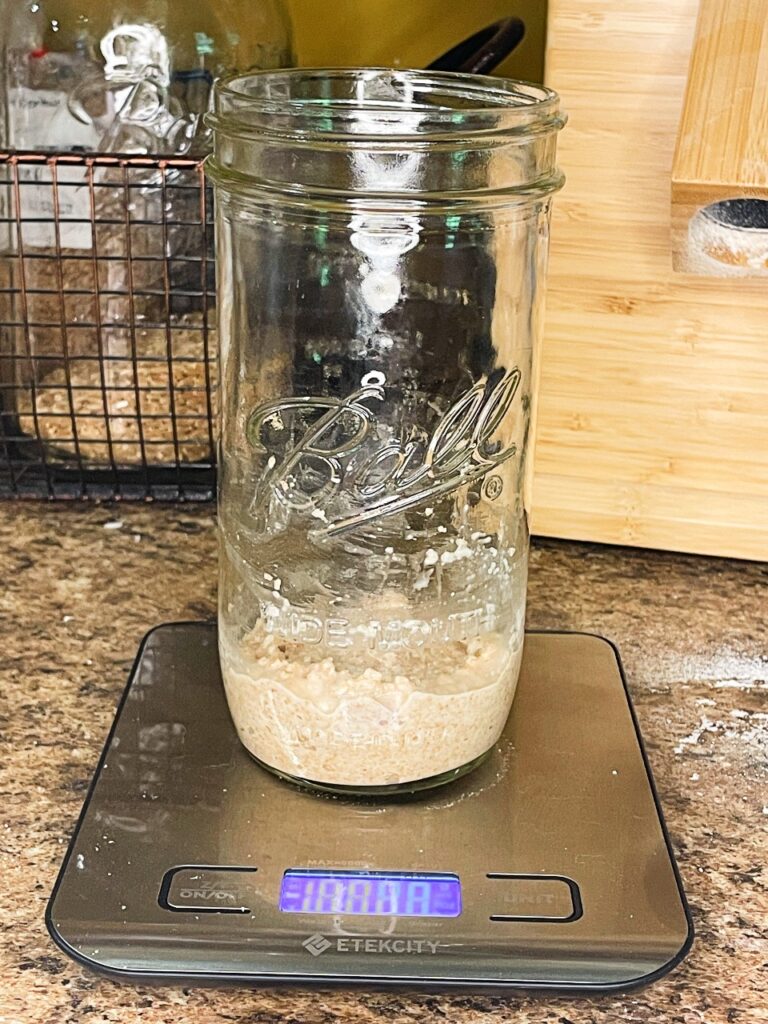
A simple feeding could look like this:
- 1/4 cup starter
- 1/4 cup fresh milled flour
- 1/4 cup water
Mix it together, cover it loosely, and let it sit at room temperature until it gets bubbly and active.
Fresh milled flour can make a starter move a little faster, so keep an eye on it. If it rises and falls quickly, it may need fed sooner.
Beginner Tips for Baking with Fresh Milled Flour
Here are the biggest things I’d keep in mind when you’re just starting.
Start with easier recipes
Pancakes, muffins, cookies, pie dough, and quick breads are a good way to get used to fresh milled flour.
Bread is wonderful, but it can be a little more particular. Starting with easier recipes helps you learn without feeling like every bake is a test.
Use the right wheat berry
A simple rule to remember:
Hard wheat for bread. Soft wheat for tender baked goods.
That one little rule can save a lot of frustration.
Let dough rest before adding more flour
Fresh milled flour takes time to absorb liquid. If your dough feels sticky, let it rest before adding more flour.
This can make a big difference.
Expect a learning curve
Your first recipe might not be perfect. That’s okay.
Fresh milled flour is a little different, and it takes time to learn how it feels. Every batch teaches you something.
My first bread loaf wasn’t perfect at all, but it still taught me something. And croutons are not a bad backup plan.
Take notes
Write down what kind of wheat you used, how much liquid you added, and how the recipe turned out.
This sounds simple, but it helps so much when you’re trying to figure out what worked and what didn’t.
Common Fresh Milled Flour Mistakes
Using the wrong wheat berry
Soft wheat is not the best choice for yeast bread because it does not have as much protein. Hard wheat is better for bread.
Adding too much flour
Sticky dough does not always mean you need more flour. Sometimes the dough just needs time to rest and absorb the liquid.
Making the dough too wet
Fresh milled flour often needs more liquid, but that does not mean every dough needs a lot more. Add liquid carefully, especially when you’re learning.
My first loaf was too wet and turned out crumbly, so now I pay closer attention to how the dough feels instead of only going by the recipe.
Expecting it to act like all-purpose flour
Fresh milled flour is whole grain flour. It absorbs more liquid, has more texture, and gives baked goods a heartier flavor.
That’s not a bad thing. It’s just something to learn.
Milling too much flour at once
Fresh milled flour is best when it’s fresh. Try milling only what you need for the recipe.
Giving up after one try
Please don’t give up after one dense loaf, crumbly loaf, or weird dough.
Your first bake is just information. It tells you what to adjust next time.
Fresh Milled Flour FAQs
Is fresh milled flour healthier than regular flour?
Fresh milled flour uses the whole grain, including the bran and germ. Because of that, it keeps more of the grain’s natural fiber and nutrients compared to refined white flour.
Can I use fresh milled flour for cookies?
Yes, you can use fresh milled flour for cookies. Soft white wheat is usually a good choice because it makes a more tender cookie than hard wheat.
Can I use fresh milled flour for pie crust?
Yes, fresh milled flour can be used for pie crust. Soft white wheat is a good choice because it is better for tender baked goods. That was actually the first thing I made with fresh milled flour when I used soft white wheat berries for a strawberry rhubarb pie.
Can I use fresh milled flour for bread?
Yes, fresh milled flour can be used for bread. Hard white wheat and hard red wheat are good choices because they have more protein and help give bread structure.
Why is my fresh milled bread dense or crumbly?
Fresh milled bread can turn out dense or crumbly if the dough is too dry, too wet, too much flour was added, the wrong wheat was used, or the dough did not have enough time to develop.
Try using hard wheat, giving the dough time to rest, and paying attention to how the dough feels as you mix and knead.
Does fresh milled bread stay soft?
Fresh milled bread can be surprisingly soft. One of the things that surprised me most with my second loaf was how soft it was and how it stayed soft longer than bread I had made with store-bought flour.
Do I have to refrigerate fresh milled flour?
You don’t have to refrigerate it if you’re using it soon, but fresh milled flour does not keep as long as white flour. For longer storage, keep it in the refrigerator or freezer.
What is the best wheat berry for beginners?
Hard white wheat is a great beginner wheat for bread because it has a mild flavor and enough protein for yeast doughs. Soft white wheat is great for muffins, pancakes, cookies, biscuits, pie dough, and quick breads.
Can I make sourdough starter with fresh milled flour?
Yes, fresh milled flour works very well for sourdough starter. Whole wheat and rye are especially helpful because they can help a starter become bubbly and active.
Final Thoughts
Fresh milled flour can feel a little unfamiliar at first, especially if you’re used to baking with regular all-purpose flour.
It absorbs liquid differently. Doughs may feel stickier. The flavor is heartier. Recipes may take a little adjusting.
But once you start learning how it works, it becomes such a satisfying way to bake.
You don’t have to learn everything at once. Start with one kind of wheat berry. Try one simple recipe. Pay attention to how the dough or batter feels. Take a few notes.
And remember, your first loaf will be your learning loaf.
That’s part of the process. One batch at a time.