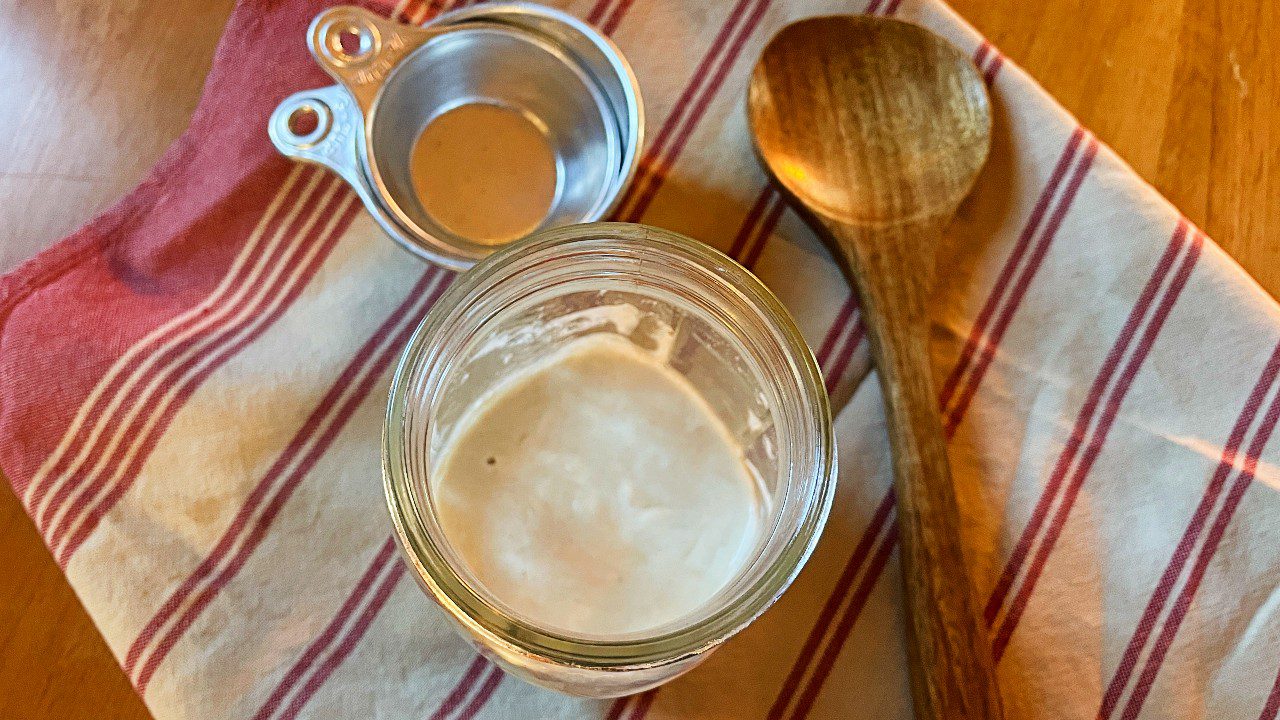
If you started a sourdough starter full of good intentions and then you realized you’re not trying to raise a high maintenance pet…. you’re not alone. Here’s exactly how to feed a sourdough starter once a week and keep it happy.
The good news? You can absolutely keep a sourdough alive without feeding it every day. I’ve been doing it once a week for a while now (sometimes once every couple of weeks), and it’s still bubbly and active, and makes great bread.
TL;DR:
This once-a-week sourdough starter feeding method is a low-maintenance way to keep your starter healthy without daily feedings. It works well for home bakers who bake occasionally and store their starter in the refrigerator. The process takes just a few minutes and fits easily into a weekly routine. Perfect if you want sourdough without the stress.
Why Feeding Your Sourdough Starter Weekly Works
Daily feedings are really only necessary if your starter lives on your countertop all of the time. But most of us aren’t baking every single day and that’s ok.
Once your starter is mature (about 7 -10 days old and reliably bubbly), it’s totally fine to store it in the fridge between bakes. The cold slows down the fermentation, so it doesn’t eat through all of it food so fast.
How to Feed a Sourdough Starter Once a Week (Step-by-Step)
Here’s what you’ll need:
- Your sourdough starter
- All-purpose or bread flour
- Filtered or dechlorinated water
- A clean jar
- A spoon or spatula
- A kitchen scale (helpful but optional)
Weekly Feeding Steps:
- Take your starter out of the fridge and let it warm up for an hour or two.
- Discard about a 1/4 cup starter (60g) of starter. It doesn’t need to be exact here.
- Feed you starter with: 1/2 cup flour (60-65g) and 1/4 cup water (60g).
- Mix it until there are not dry bits left. The sourdough starter should be thick but easy to mix.
- Loosely cover and let it sit at room temperature for about 6 -12 hours, until it gets bubbly and starts to rise.
- Once it shows signs of activity, return the sourdough starter to the refrigerator until the next week.
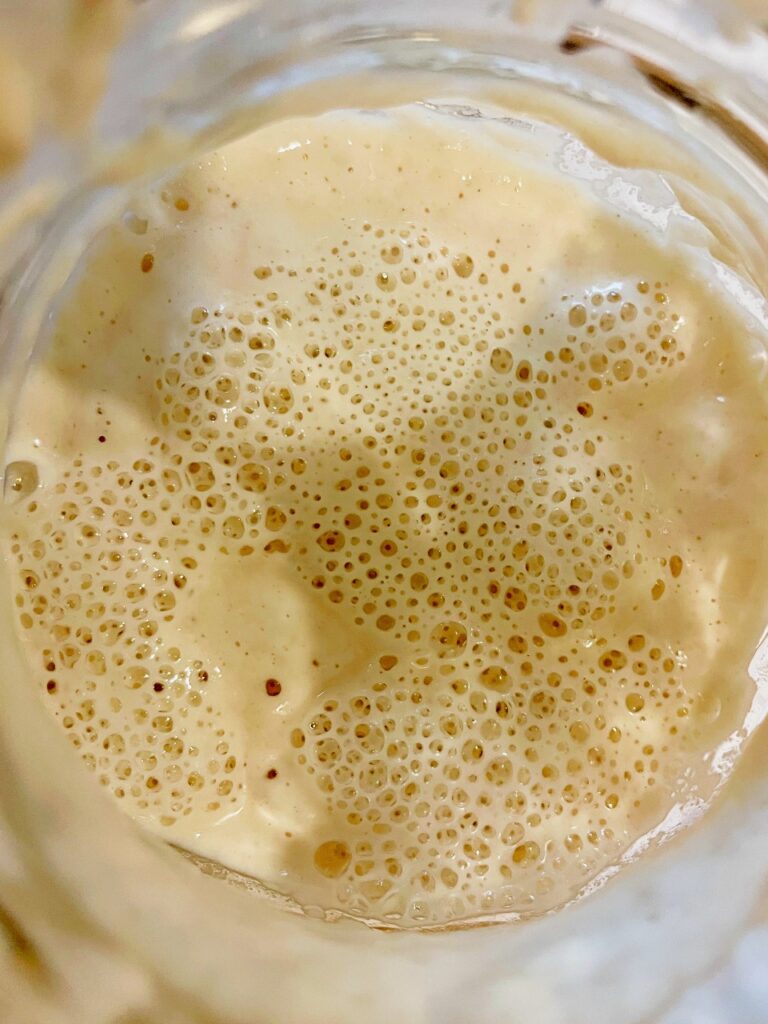
Thats it. No fuss. No daily check-ins. And yes, it really works.
Can You Skip a Week of Feeding?
If you open your jar and see a layer of gray liquid on top (that’s called hooch), don’t panic. Just pour it off or stir it in and give it a sniff (sour = good, moldy or rotten = not good). If it passes the sniff test, feed your starter like usual.
Even after 2 or 3 weeks in the fridge, a healthy starter usually bounces back with a good feeding or two.
How to Reactivate Your Starter Before Baking
When you’re planning to bake, take your starter out of the refrigerator night before. Give it one or two feedings at room temperature until its active and bubbly again. This helps it rise your dough properly.
Bonus: Free Sourdough Starter Tracker

If you want to keep track of your feedings without having to guess, I made a free printable Sourdough Starter Log for you. It’s cute, clean, and looks right at home on your fridge.
You’ve Got This
Don’t let sourdough stress you out. Feeding your starter once a week is plenty for most home bakers. If you’re keeping it in the fridge and giving it fresh food every 7 days or so, you’re doing great.
So, if you’ve been wondering how to feed a sourdough starter once a week, now you’ve got a method that works.
Got questions? Drop them in the comments.
Got a starter name? I want to hear it.
Happy Baking!
-Renee, The Pickled Farmhouse

Hi, I’m Renee. I’m a farmer’s wife, a mom of two, and an introvert with the occasional burst of extrovert energy. Most days you’ll find me in the kitchen surrounded by flour, jars, or something bubbling away on the stove. I love the rhythm of the seasons, the coziness of home, and finding joy in the little things (like the first cup of coffee or fresh bread still warm from the oven).



Thank you so much.
You’re welcome! I will be posting a sourdough series soon!
When in the fridge, do you still keep a loose cover on the starter container or an air tight lid?
Great question! When my starter goes into the fridge, I keep a loose lid, not airtight. You want it covered to keep it from drying out or picking up fridge smells, but still able to release any gas as it slowly ferments. A lid set on top or a jar lid screwed on loosely works perfectly.