Juicy Slow Roasted Turkey at 250 Degrees
A Juicy, Deeply Seasoned Holiday Turkey
If you have ever felt rushed cooking a turkey, this method is for you. No cranking up the oven. No dry breast meat. No last-minute panic.
Slow roasted turkey at 250 degrees is a low and slow cooking method that produces juicy, well seasoned meat without drying out the breast. Cooking a turkey at a lower temperature allows it to roast evenly and gently, resulting in tender meat and reliable results, especially when paired with a brined turkey.
If you already brined your turkey, you are ahead of the game. A good brine sets the foundation for flavor and moisture. If you missed it, you can find my full simple turkey brine recipe here and start with the best possible base.
This roasting method works beautifully with a brined bird and delivers consistent results year after year.
Why Roast a Turkey at 250 Degrees?
Roasting a turkey at 250 degrees allows it to cook gently and evenly. The breast meat stays tender while the dark meat finishes properly, without drying out before the other is done.
This method is perfect if:
- You want juicy white meat
- You prefer a calmer cooking pace on holidays
- You do not want to babysit the oven
- You want reliable results without stress
Low and slow may sound unconventional, but it produces one of the most forgiving turkeys you will ever make.
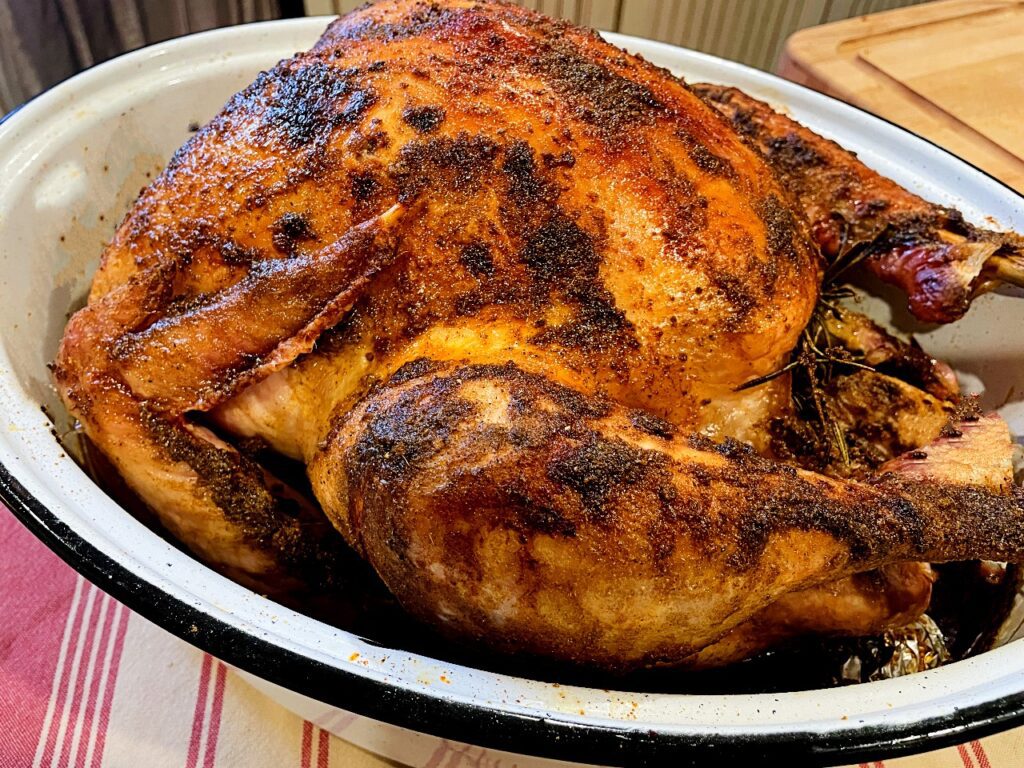
Ingredients for Slow Roasted Turkey
- 1 whole turkey, brined if possible
- butter or olive oil
- salt and black pepper
- garlic powder
- onion powder
- paprika
- dried thyme and sage
- fresh rosemary, onion, celery, and garlic for the cavity.
How to Season a Slow Roasted Turkey
Remove the turkey from the brine and pat it completely dry with paper towels. Dry skin helps for browning later.
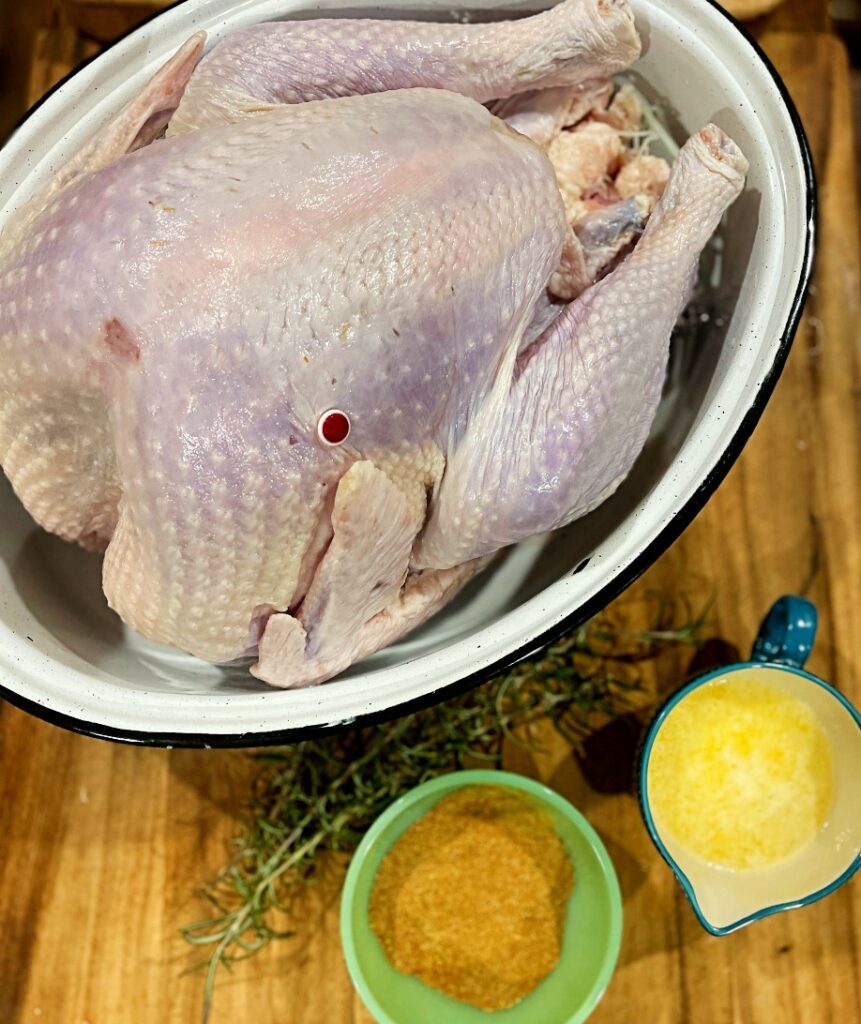
Rub the entire turkey with melted butter or olive oil, including under the skin if you are comfortable doing that.
Blend together all seasons and season the turkey generously. Do not forget the cavity.
Stuff the cavity with onion, celery, garlic, and fresh herbs if using. Place turkey breast side up on a rack in a roasting pan.
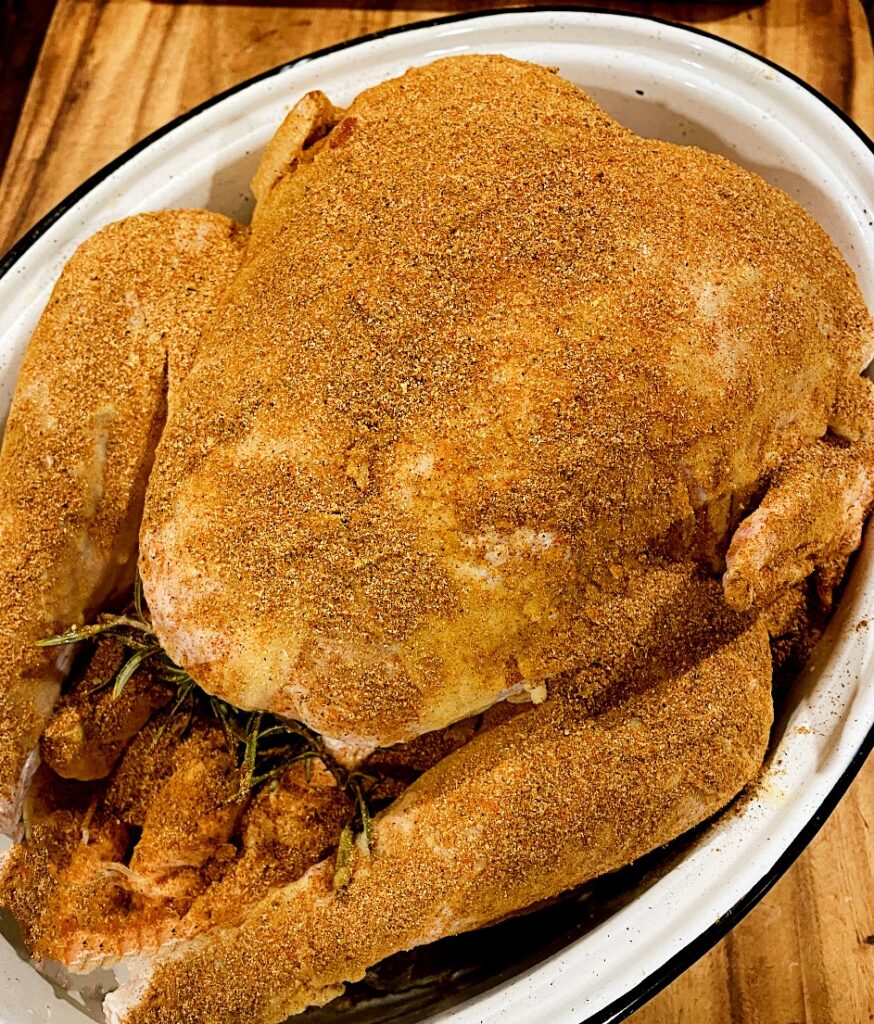
How to Slow Roast a Turkey at 250 Degrees
Preheat your oven to 250 degrees.
Loosely cover the turkey with foil and place it in the oven. The foil helps retain moisture during the long roast.
Plan on about 30 minutes per pound, but always rely on internal temperature rather than time.
During the last 45 minutes to 1 hour, remove foil so the skin can continue to brown.
How do I know my turkey is done?
A turkey is fully cooked when the breast reaches an internal temperature of 165 degrees and the thigh reaches 175 to 180 degrees. Always check the temperature with a meat thermometer in the thickest part of the meat without touching bone.
Resting the Turkey
Remove the slow roasted turkey from the oven and tent loosely with foil. Let it rest for at least 30 minutes before carving.
Resting allows the juices to redistribute through the meat, which makes a noticeable difference when slicing.
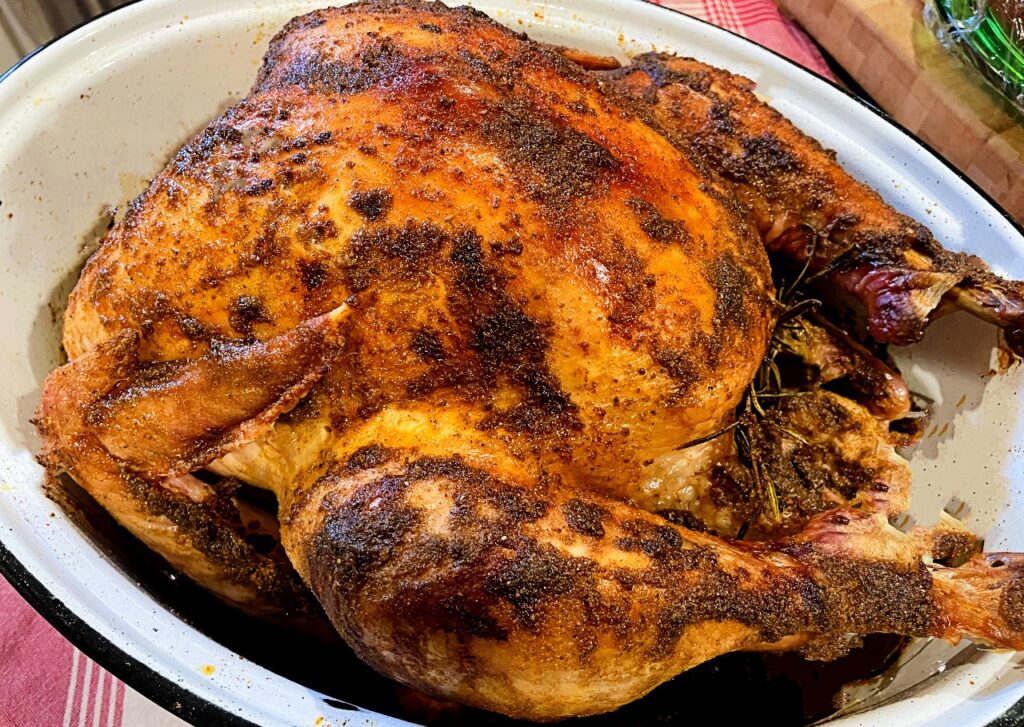
What to Expect From This Slow Roasted Turkey
This slow roasted turkey is:
- Juicy and tender throughout
- Well seasoned from skin to bone
- Easy to carve
- Calm and predictable to cook
It does not require constant basting or stress. Just steady heat and patience.
A Quick Note From My Kitchen
If turkey has ever made you nervous, this method takes the pressure off. Slow roasting gives you control without rushing, and it pairs perfectly well with a brined bird.
This is the kind of turkey that fills the house with warmth, and lets you enjoy the day along with everyone else.
If you are looking to build a holiday menu, you might also like my Sourdough Herb Stuffing, Creamy Au Gratin Potatoes, and Corn Pudding.
Frequently Asked Questions About Slow Roasting A Turkey
Is it safe to cook a turkey at 250 degrees?
Yes, it is safe to cook a turkey at 250 degrees as long as reaches a safe internal temperature. The key is using a meat thermometer and cooking the turkey until the breast reaches 165 degrees and the thigh reaches 175 to 180 degrees.
Cooking at a lower temperature simply means the turkey takes longer to cook. It does not make it unsafe, and many people prefer this method because it helps prevent the meat from drying out.
How long does it take to cook a turkey at 250 degrees?
A turkey cooked at 250 degrees takes about 30 minutes per pound. Cooking time can vary based on turkey size and oven accuracy, so internal temperature should always be used to determine doneness rather than time alone.
Does slow roasted turkey skin get crispy when cooked at a low temperature?
Low temperature roasting produces very juicy meat, but the skin will not fully crisp on its own at 250 degrees. To achieve the crispy skin, remove the tented foil near the end of cooking and increase the oven temperature to 400 degrees for 10 to 15 minutes.
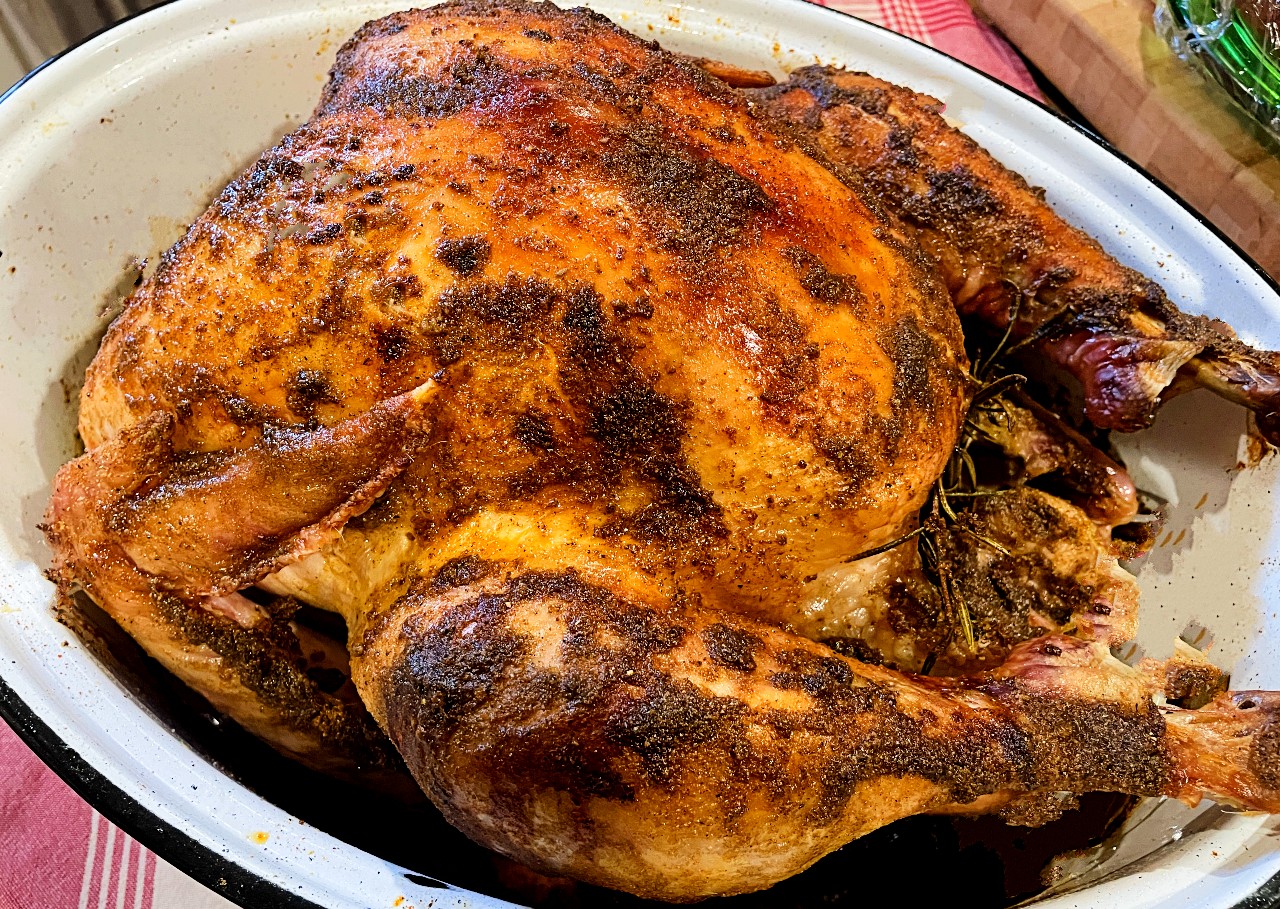
Slow Roasted Turkey
Ingredients
Method
- Remove turkey from brine, if using, and pat completely dry with paper towels. Let sit at room temperature for about 30 minutes.
- Preheat the oven to 250 degrees. Place rack inside a roasting pan.
- In a small dish, blend together salt, pepper, garlic powder, onion powder, paprika, sage, and thyme.
- Rub turkey all over with softened butter or olive oil, including under the skin if desired.
- Season the turkey with the spice blend. Be sure to season the cavity as well.
- Stuff the cavity with onion, celery, garlic, and fresh rosemary.
- Place turkey breast side up on the rack. Loosely cover with foil.
- Roast at 250 degrees for about 30 minutes per pound, check internal temperature as it cooks.
- During the last hour or so remove the foil so the skin can finish browning.
- The turkey is done when the breast reaches 165 degrees and the thigh reaches 175 to 180 degrees.
- Optional: For extra browning, increase oven temperature to 400 degrees for the final 10 to 15 minutes, watching closely.
- Remove turkey from the oven, tent loosely with foil, and rest for at least 30 minutes before carving.
Notes
- Cooking time will vary depending on turkey size and oven accuracy. Always rely on internal temperature rather than time.
- If using a brined turkey, reduce added salt to avoid over seasoning.
- Resting the turkey is essential for juicy slices and easy carving.